The Mold Removal Lansing MI Residents Know And Trust
Protect your home and health with expert mold removal services in Lansing.





Emergency Response Available
Mold emergencies don't wait for business hours. Contact our team day or night to schedule immediate assessment and containment services throughout the Greater Lansing area!
Certified Remediation Specialists
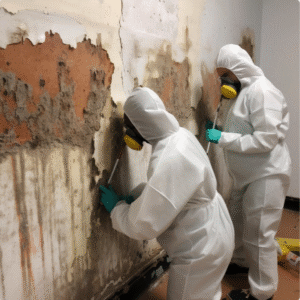
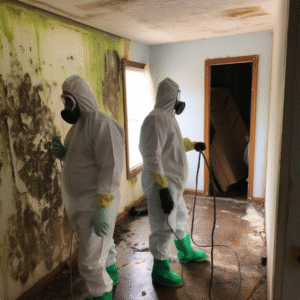
Our IICRC-certified technicians use industry-leading protocols and advanced equipment to safely remove mold and restore healthy indoor environments for Michigan families!
Complete Documentation Provided
Need reports for insurance claims or real estate transactions? We provide detailed inspection findings, remediation plans, and post-treatment verification for your peace of mind!
★ FAQ
Frequently Asked Questions
Mold can begin growing within 24-48 hours after water intrusion if conditions are favorable. Porous materials like drywall, insulation, and carpeting absorb moisture rapidly, providing ideal conditions for colonization. This is why immediate water extraction and structural drying are critical after flooding, leaks, or pipe bursts. Delaying response increases both the extent of contamination and the overall remediation cost.
Small areas under 10 square feet on non-porous surfaces can often be cleaned with appropriate precautions, but larger contamination requires professional remediation. DIY attempts often spread spores throughout the property and fail to address hidden growth or moisture sources. Black mold, mold in HVAC systems, and contamination affecting structural materials always warrant professional assessment and removal.
Common symptoms include persistent coughing, sneezing, nasal congestion, throat irritation, headaches, fatigue, and skin rashes. Individuals with asthma may experience increased attack frequency and severity. Symptoms typically improve when away from the property and worsen upon return. If multiple occupants experience unexplained respiratory issues, professional mold inspection should be conducted promptly.
Coverage depends on the mold's cause. Most policies cover mold resulting from sudden, accidental water damage like burst pipes or appliance malfunctions, but exclude damage from long-term neglect, flooding, or maintenance issues. Review your specific policy and document all damage thoroughly. Professional remediation companies provide detailed reports that help support insurance claims.
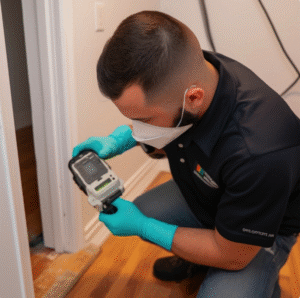
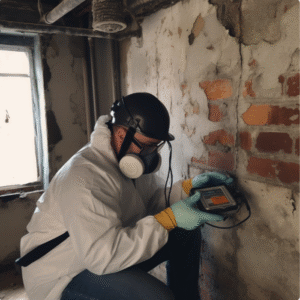
We use multiple detection methods including moisture meters that identify elevated moisture levels behind surfaces, thermal imaging cameras that reveal temperature variations indicating moisture accumulation, and invasive inspection when necessary. Air quality testing detects elevated spore levels even when growth isn't visible. Musty odors, water stains, and occupant symptoms also guide our investigation of hidden contamination.
Mold removal refers to eliminating visible mold growth, while remediation encompasses the complete process—identifying moisture sources, containing affected areas, removing contaminated materials, treating surfaces, correcting moisture problems, and verifying successful elimination through testing. True remediation prevents recurrence by addressing root causes, not just surface symptoms. Professional remediation provides long-term solutions rather than temporary fixes.
Timeline depends on contamination extent and property size. Small bathroom projects may complete in 1-2 days, while extensive basement or whole-
📍 On the map
Our Proven Mold Remediation Process
Systematic approach ensures complete removal and prevents future growth
Our comprehensive six-phase mold remediation system addresses immediate contamination while correcting underlying moisture problems to keep your property mold-free for years to come.